Need 24/7 Service? Call for Emergency Repairs Call:
Updated: January 19, 2026
What East Cobb Homeowners Need to Know: Busting 9 Common Garage Door Myths
No — those garage‑door myths aren't harmless. Insulation matters even in hot, humid East Cobb summers; springs are dangerous and should be serviced by trained pros; maintenance prevents emergency repairs; and door choices matter for energy, noise, and lifespan. Read on for nine myths, plain facts, and practical next steps you can use this weekend. A Plus Mega Garage Doors
Quick answer (direct)
Short answer: the common garage‑door myths are misleading and can cost you comfort, money, or safety. Insulation, seals, and regular maintenance matter in East Cobb; springs and cables are hazardous and should be handled by professionals; and picking the right door and opener pays off over the long run.
Why this matters in East Cobb
East Cobb (Marietta area) sees hot, humid summers — July average highs are about 87–88°F — and many homes have attached garages. An uninsulated garage door lets heat, humidity, and dust into living spaces and forces your AC to work harder. Insulation, proper seals, and scheduled maintenance protect comfort, HVAC systems, and stored items. For local climate context see BestPlaces (Marietta climate).
East Cobb / Marietta climate snapshot
Hot, humid summers and mild winters mean you'll benefit from reducing heat transfer in summer and cutting drafts in winter if your garage is attached to living space.
Myths, facts, and what to do
Below: claim → evidence → implication. Each myth ends with a short action you can take.
Myth 1 — "All garage doors are basically the same."
Fact: Doors differ by material, build, insulation, and hardware; those differences affect durability, noise, security, and energy use.
Evidence: Steel, wood, aluminum, and composite doors have different lifespans and maintenance needs (typical range 15–30 years). Insulated steel doors tend to last longer and add thermal performance. See Angi — How long do garage doors last?.
Implication: Choose a door for your priorities. If your garage is attached or a home workshop, prioritize insulation and stronger hardware.
Myth 2 — "Insulated doors aren't needed in Georgia."
Fact: Insulation helps in hot climates by reducing heat flow into the garage and lowering AC run time for adjacent rooms.
Evidence: Industry guidance shows insulated doors (R‑values in the mid range) reduce heat transfer; houses with attached garages often see energy benefits in the range of about 10–20% for affected thermal loads. See A Plus Mega Garage Doors — Garage door buying guide.
Implication: For East Cobb attached garages, a mid‑range insulated door (R≈8–13) is often cost‑effective.
Myth 3 — "Garage doors don't need maintenance."
Fact: Regular maintenance (about twice a year) prevents failures and extends life.
Evidence: Simple checks—lubricate moving parts, inspect springs and cables, test auto‑reverse sensors, replace weatherstripping—cut emergency calls and prolong lifespan. Weatherseal replacement every 2–3 years is commonly recommended. See The Spruce — Garage door seals.
Implication: A 15–30‑year door will underperform and cost more without scheduled maintenance.
Myth 4 — "If it's broken I can (and should) DIY the repair."
Fact: Small tasks like replacing weatherstrips or tightening loose hardware are DIY‑friendly. Torsion/extension spring repair is not.
Evidence: Torsion springs store high tension; safety reports and industry guides document thousands of garage‑door injuries annually and warn that spring replacement is a job for professionals. Typical torsion spring replacement costs range from about $150 to $350; DIY attempts risk injury and void warranties. See The Spruce — Spring replacement and guidance from CPSC/NEISS summaries.
Implication: Do the easy maintenance yourself; call a pro for springs, cables, or anything under tension.
Myth 5 — "All insulation types perform the same."
Fact: Insulation type matters—polystyrene panels, polyurethane foam, and reflective radiant barriers differ in R‑value, moisture resistance, and cost.
Evidence: Polyurethane foam has a higher R‑value per inch and better noise reduction; reflective barriers help with radiant heat. See OHDBellingham — Insulation guide.
Implication: In East Cobb, foam‑filled (polyurethane) or double‑layer doors often give the best balance of heat control and durability.
Myth 6 — "Heavier doors are always bad for openers."
Fact: A properly balanced door and correctly sized opener work safely together; heavier insulated multi‑layer doors may require higher‑rated openers but also provide thermal and noise benefits.
Evidence: Openers typically last 10–15 years; a mismatched opener or an unbalanced door shortens opener life and raises failure risk. See Easy Garage Door Repair — Lifespan & openers.
Implication: When upgrading to a heavier door, budget for a compatible opener and pro installation.
Myth 7 — "Weatherstripping is just cosmetic."
Fact: Seals stop drafts, pests, and moisture; they affect energy use and prevent corrosion.
Evidence: Weatherseal replacement every 2–3 years reduces air infiltration and moisture damage to springs and tracks. See The Spruce — Weatherstripping.
Implication: Don't skip seals — it's a low‑cost, high‑impact maintenance item.
Myth 8 — "A loud door is just old — you can ignore it."
Fact: Noise often indicates failing rollers, worn bearings, or loose hardware.
Evidence: Replacing steel rollers with sealed‑bearing nylon rollers reduces noise and typically increases roller life to 8–12 years. See GarageDoorMore — Lifespan & rollers.
Implication: Fix noisy parts early — it's cheaper than repairing a bent track or failed opener later.
Myth 9 — "Buying the cheapest door saves money long term."
Fact: Cheapest doors often lack insulation, use thinner gauge steel, and have lower‑quality hardware — all of which increase lifetime costs.
Evidence: Higher quality doors have better R‑values, stronger panels, longer warranty coverage, and lower repair frequency. See Angi — Why replace a garage door?.
Implication: Evaluate life‑cycle cost (purchase + energy + repair), not just upfront price.
Quick comparison table — pick the right door type
| Door Type | Typical Lifespan | Pros | Cons | Best for |
|---|---|---|---|---|
| Steel (insulated) | 20–30 yrs | Durable, affordable, insulation options | Can dent or rust without coatings | Most homeowners, attached garages. See Angi |
| Wood | 15–25 yrs | High curb appeal | High upkeep, warps | Historic homes, aesthetic projects. See Angi |
| Aluminum | 15–25 yrs | Lightweight, rust‑resistant | Dents easily | Modern look, mild climates. See Mega Garage Door Repair |
| Fiberglass / Composite | 20–30 yrs | Moisture resistant, light | UV fade potential | Coastal or humid areas. See Easy Garage Door Repair |
Seasonal maintenance checklist — do this twice a year
- Visual safety check: Look for loose bolts, gaps, and frayed cables. If you see slack cables or a visible spring gap, stop using the door and call a pro. See Valley Lock & Door — Spring safety.
- Test auto‑reverse: Place a 2x4 on the floor and close the door. It must reverse on contact. Test photo‑eye sensors too. See OfficeFinder — Auto reverse testing.
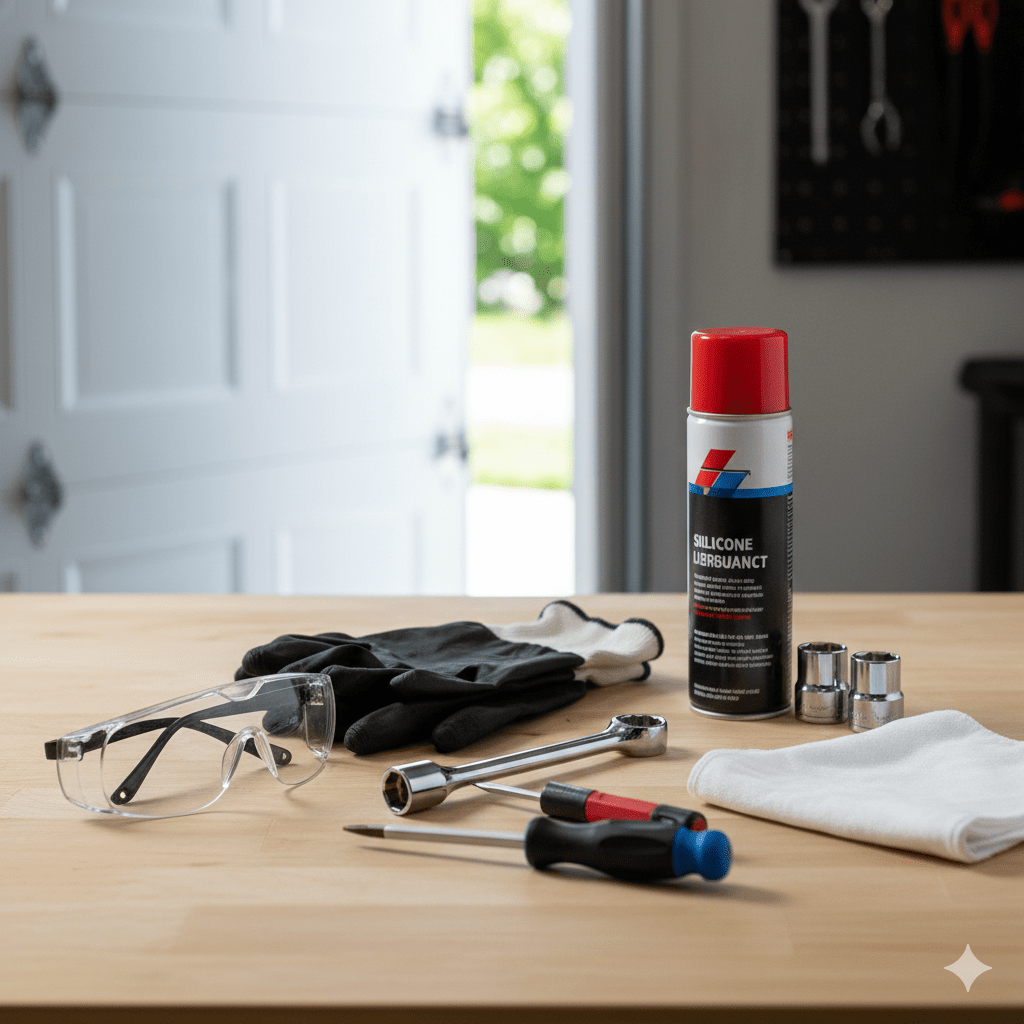
- Lubricate moving parts: Use a light silicone or lithium lubricant on rollers, hinges, and bearings (avoid lubricant on photo‑eyes).
- Inspect weatherstripping: Replace cracked or flattened threshold seals. See The Spruce.
- Run and listen: New screeches suggest worn rollers/hinges; loud bangs suggest a broken spring or cable — stop and call a pro. See GoodGolly Garage — Spring repair guide.
When to call East Cobb Garage Network (signs + pricing expectations)
Call immediately if you see a visible spring gap, a dangling cable, the door won't open, the door is crooked, you heard a loud bang, or the door won't stay open. These are emergency signs. See general guidance at Mister Garage Door Repair.
Ballpark costs: spring replacement $150–$350; full door replacement $800–$3,500 depending on material and insulation; tune‑ups $50–$150. Always ask for a written quote and inquire about high‑cycle springs for heavy use. See The Spruce — Pricing guide.
A human note (real‑world style)
Homeowners often say, "My garage's only job is to store junk." The usual sequence: small neglect → snapped spring on a Saturday morning → emergency call. A 20‑minute tune‑up twice a year avoids the worst of that drama.
Three simple next steps
- Do the 10‑minute safety checklist this weekend (see steps 1–2 above).
- If your garage is attached and uninsulated, get a quote for a mid‑range insulated door (R≈8–13).
- If a spring or cable looks wrong, stop using the door and call a certified technician.